
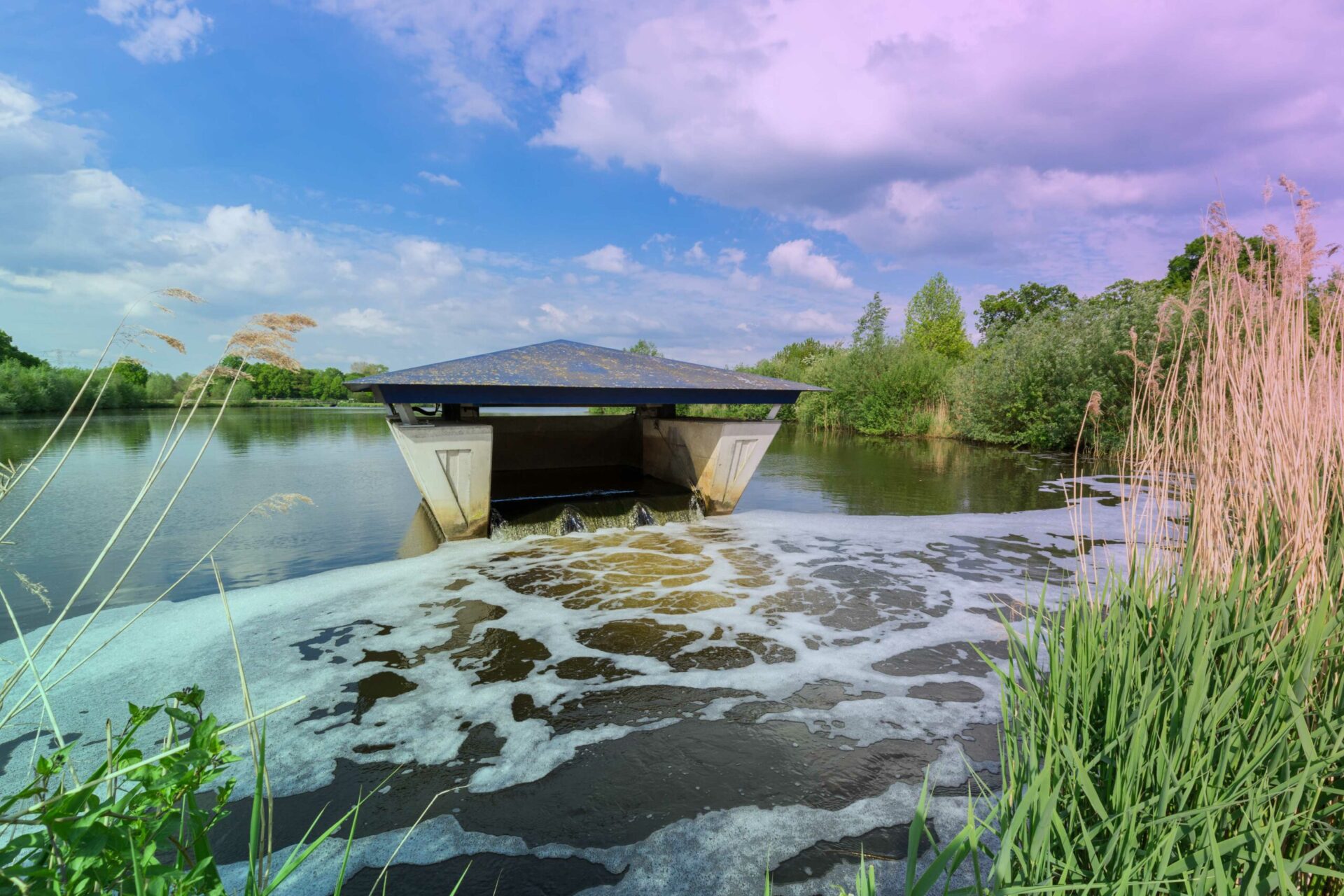
The harmful effects of wastewater and stricter compliance with the WFD (Water Framework Directive) are forcing many organizations in the chemical industry to intensify their wastewater treatment. But how can this be done in an affordable and sustainable way? The solution is already available. It’s called advanced oxidation.
How big is the problem?
Our European rivers, streams, and canals are filled with microplastics, PFAS, pesticides, and pharmaceutical residues, as well as waste products from the chemical industry. Think, for example, of high concentrations of cyanide, benzidine, or dioxane, or harmful byproducts that can occur in purification processes involving chlorine or ozone. These substances not only cause significant ecological damage but also pose a direct threat to our health and drinking water.
Stricter legislation is coming
Change is necessary, and it needs to happen on a large scale. In four years, by 2027, every EU member state must comply with the European directives set in 2000. Additionally, the directive on urban wastewater is being revised and tightened. Organizations in the chemical industry will therefore face stricter regulations for wastewater discharge and changing, more complex licensing procedures and enforcement. They are compelled to critically examine their current wastewater treatment systems. And in many cases, they’ll realize that they are not meeting the standards and are not future-proof.
Traditional techniques fall short
For instance, companies still use hypochlorite to remove cyanide. This process generates potentially toxic substances (AOX), is not sustainable, and results in relatively high operational costs. Other water treatment methods, such as activated carbon or ozone, face similar problems. They are only effective for a select group of substances (thus unsuitable for expansion), produce harmful byproducts, and are labor-intensive or costly. In the case of activated carbon processes, the CO2 footprint is also substantial.
Advanced oxidation
Well-known alternatives are filtration and absorption, which are effective techniques. However, they do not completely solve the problem as the pollutant still needs to be disposed of in concentrated form. There is, however, one technique that provides a solution: advanced oxidation. This technology was developed a few years ago by Van Remmen UV Technology and Nouryon. “With advanced oxidation, we use low-pressure UV-C light and hydrogen peroxide to efficiently treat water,” explains director Ton van Remmen. “This combination of techniques not only removes the most stubborn chemical compounds but also microbiological and other contaminants. Moreover, no byproducts are generated. This allows you to discharge the water cleaner than when you initially received it. This technology has minimal sustainability impact and maintenance requirements compared to other techniques.”
Great opportunities for the chemical industry
The innovative technology has not gone unnoticed. It is now used for various purposes, from removing pesticides in runoff water to eliminating dioxane and benzidine from wastewater. However, the chemical industry can still make further progress, according to Van Remmen. “There is a strong attachment to traditional techniques. Understandable, but especially now that regulations are becoming stricter and sustainable choices are crucial, advanced oxidation offers an effective alternative for organizations in the chemical industry. By choosing this technology, you opt for affordability and the certainty of effectively removing harmful chemicals, now and in the future.”
Discover the possibilities
Are you curious about the potential of advanced oxidation for your wastewater? Van Remmen UV Technology has already assisted many organizations in making the transition and is happy to provide guidance on the optimal application of this technology. Contact us for more information.